
The EBRAINS Virtual Users’ Week is a set of online, free-of-charge, hands-on tutorials which aim to train new and existing EBRAINS users.
Tutorials will be targeted at beginner, intermediate and advanced educational levels and will cover a range of EBRAINS tools and services. Each tutorial will be offered twice in the same day to accommodate users in different time zones. Users in European and African countries may be able to join two different tutorials per day if they wish. Meanwhile the first session of each day is targeted towards users in Asia and Oceania, while the second session is targeted towards users in the Americas.
Programme
The programme is available below. It will be updated as times and target user levels are confirmed for each tutorial.
Registration
Registration is open now until 8 October and takes place via Eventbrite here.
Organiser: EBRAINS Education Team | Medical University Innsbruck
Contact: education@ebrains.eu
Tutorials will include:
Brain research requires access to core resources, such as imaging equipment, computing infrastructure, or clinical data. However, these resources are typically distributed across multiple institutions, creating fragmented workflows. As a modern researcher, your ability to collaborate with project partners is just as critical as your technical skills.
This workshop positions co-design as a core competency for the modern researcher. You will learn how to align diverse project partners, streamline fragmented processes, and apply FAIR principles to your research.
Target group of the workshop: This workshop is suitable for beginners and anyone who is interested in making their workflows interoperable with the EBRAINS research infrastructure
Expected learning outcomes: By the end of the workshop, participants will…
- have a better understanding of co-design and why it is valuable for brain research;
- learn about scientific use cases and demonstrators that were made interoperable with the EBRAINS research infrastructure through co-design;
- learn how to create workflow diagrams and communicate their research to other participants using co-design principles.
Preparations: Participants should register for an EBRAINS account.
Workshop Chair: Wouter Klijn, Forschungszentrum Jülich, Germany
Workshop Speakers: Dr Katya Zossimova, Forschungszentrum Jülich, Germany; Anastasiia Andriievska, RISE Research Institutes of Sweden
Dr Katya Zossimova
Katya has a PhD in Physics from the University of Exeter (UK), and was previously a scholar at the A*STAR Institute of High Performance Computing (Singapore) and the University of Freiburg (Germany). She is currently affiliated with the Simulation and Data Lab Neuroscience at Forschungszentrum Jülich, which is home to the fastest supercomputer in Europe. As a member of the EBRAINS Science Support team, she helps researchers to leverage the EBRAINS digital infrastructure and strives to make the latest computing technologies more accessible to the neuroscience community. She has been involved in several key initiatives related to co-design, student outreach, and the Google Summer of Code.
Anastasiia Andriievska
Anastasiia Andriievska is a Research and Development Engineer at RISE Research Institutes of Sweden and a member of the EBRAINS Science Support Team. She contributes to training, outreach, and user support activities that support researchers effectively use the EBRAINS Research Infrastructure. Her work focuses on facilitating access to digital research services and fostering collaboration across scientific communities, infrastructure providers, and technology developers.

The online QUINT workflow is an analytical solution for rodent brain histology, allowing researchers to register brain section images to a reference brain atlas; and to extract, quantify and visualise labelled features in reference atlas space. It supports analysis using reference brain atlases from mouse and rat such as the Allen Mouse Brain Atlas Common Coordinate Framework version 3 (CCFv3) or the Waxholm Atlas of the Sprague Dawley rat version 4 (WHSv4).
Target group of the workshop: students and researchers working with 2D histological data and 3D light sheet microscopy.
Expected learning outcomes: What the QUINT Workflow is about, how to access the QUINT-online page and how to use it.
Preparations: none.
Workshop Speakers: Heidi Kleven, University of Oslo; Arda Balkir, University of Oslo; Cristina Martinez Gonzàlez, University of Edinburgh, and Maja A. Puchades, University of Oslo
Bios:
Dr. Maja A. Puchades (University of Oslo) is a senior researcher working with digital atlasing tools with a research interest in neurodegenerative related diseases (Alzheimer, Parkinson and Huntington). She received her PhD in 2003, from Gothenburg University, Sweden, with a thesis focused on developing proteomic methods for studying biomarkers of Alzheimer’s disease.
In the Human brain project (HBP) and EBRAINS infrastructure, Puchades participates in the EBRAINS Data and Knowledge service; is involved in the development of the Brain Atlas Services. She has developed the QUINT workflow for atlas -based analysis of rodent brain section images.
She will present an overview of EBRAINS tools for analyses of rodent brain images and the QUINT workflow, which consists of several tools allowing users to register their images to a reference atlas and perform quantitative analysis in atlas context.
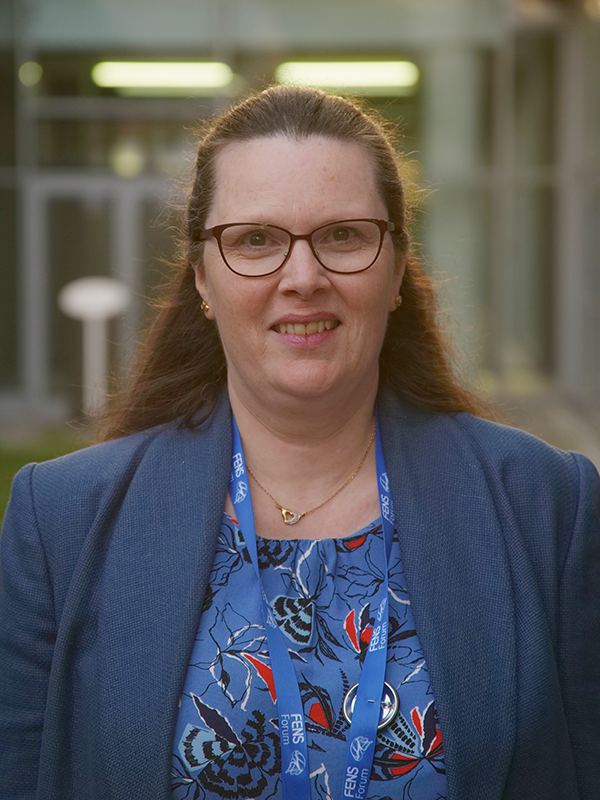
Arda Balkir (University of Oslo) is a researcher working on the QUINT Online, the cloud deployed workflow for the classification, analysis and quantification of the histology images in relation to digital atlases. He has a Bachelor of Science in Computer Science with Honours in Software Engineering, and research interest include high performance software, cloud deployments, model training / AI, and statistical representation / classification. He will demo the current application, features and the possibilities with QUINT Online.

Heidi Kleven is a PhD student at the Neural Systems laboratory at University of Oslo. Her research has focused on brain atlases, specifically, how to standardize use of atlases and developing rat and mouse brain atlases.
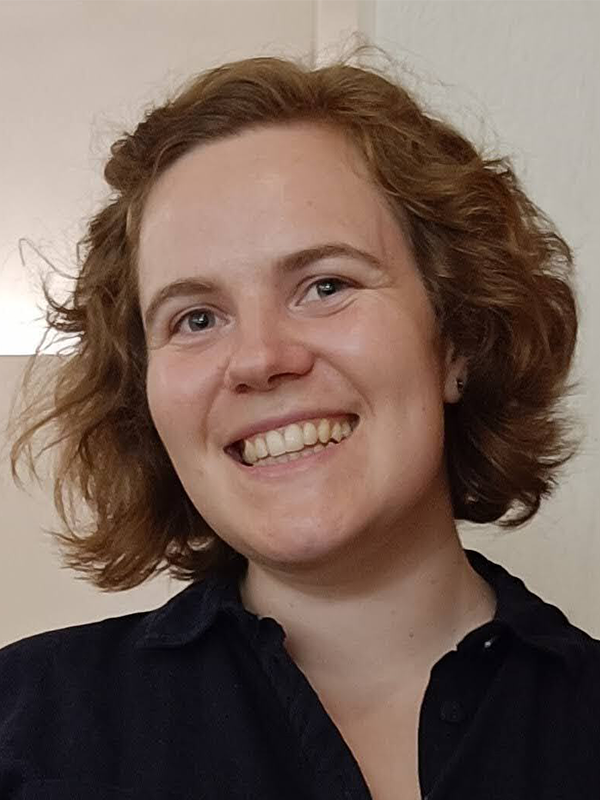
Dr Cristina Martinez Gonzalez is a Research Fellow at the University of Edinburgh and leads the Light-Sheet Microscopy and 3D Image Analysis Facility. Her research uses advanced imaging and tissue-clearing techniques to map brain-wide circuit changes in neurological and neurodevelopmental conditions, including autism and epilepsy.
Cristina studied Biochemistry in Mexico before completing her PhD in Neuroscience at the University of Oxford, where she researched Parkinson’s disease. She subsequently undertook postdoctoral research at EPFL in Switzerland on spinal cord injury before joining the University of Edinburgh. She has developed whole-brain imaging approaches such as RatDISCO and established Scotland’s first dedicated open-access light-sheet microscopy facility.
Beyond research, Cristina is passionate about public engagement, mentorship, and building inclusive scientific communities. She contributes to the Equality, Diversity and Inclusion and Postdoctoral Society committees within her institute, as well as Edinburgh Bioimaging and the Wildsheet microscopy communities. In 2024, she received the Postdoc Citizenship Award and was runner-up for Scottish Microscopist of the Year, recognising her contributions to the field, support for early-career researchers, and commitment to promoting inclusivity in science.
This hands-on session introduces the siibra-explorer as the interactive gateway to the EBRAINS atlases across species (human, macaque, rat, mouse). We will navigate high-resolution reference templates and parcellations, compare atlas versions, and discuss how multimodal brain maps (ranging from cytoarchitectonic features to connectivity, images, and gene/gene-product information) are linked to regions of interest. Participants will learn practical workflows for locating regions, inspecting their context, and assembling publication-ready, shareable views. We will also touch on how the explorer connects to other EBRAINS resources to retrieve region-specific information for analysis and reporting. By the end, attendees will be able to confidently use siibra-explorer to interrogate brain organization across scales and modalities, and to communicate findings with clear, atlas-based visuals. The workshop is designed for first-time users and will include short, guided exercises and time for Q&A.
Target group of the workshop: Researchers and students in neuroimaging, neuroscience, and related fields who want to use atlas-based context in their work. No coding required. Basic familiarity with neuroanatomy and common reference spaces is helpful but not mandatory (beginner)
Expected learning outcomes:
- Confident navigation of the siibra-explorer interface (search, atlas/parcellation selection, region analysis)
- Understanding of how atlas context supports analysis and reporting
- Exporting figures/screenshots suitable for presentations and publications (including quotations)
Preparations:
- A laptop with a recent web browser (Chrome or Firefox recommended); a mouse is helpful.
- Stable internet connection.
- Create a free EBRAINS account in advance to enable saving/sharing where applicable.
- No prior attendance in another session required.
Workshop Speaker(s) / Tutor(s): TBC
In this tutorial, participants have the chance to explore BrainScaleS-2, one of the world’s most advanced analog platforms for neuromorphic computing. For the tutorial, participants will use a web browser on their own laptop for remote access to BrainScaleS-2 systems via the EBRAINS Research Infrastructure. After a short introduction to neuromorphic computing and spiking neural networks, they will learn how to express and run experiments on the neuromorphic platform through either the (machine-learning targeting) PyTorch- or the (neuroscience targeting) PyNN-based software interfaces. This will allow them to gain insights into the unique properties and challenges of analog computing and to exploit the versatility of the system by exploring user-defined learning rules. Each participant will have the opportunity to follow a prepared tutorial or branch-off and implement their own project on the systems.
Target group of the workshop: Researchers interested in neuromorphic compute systems and emulating spiking neural networks (beginner).
Expected learning outcomes: Participants should gain insights into the unique properties and challenges of analog computing.
Preparations: Participants will need a computer with a web browser installed (in order to have access to the EBRAINS Lab) and an EBRAINS account or EBRAINS guest account.
Workshop Speakers: Jakob Kaiser, Heidelberg University; Simon Jonscher, Heidelberg University; Lucas Eekhof, Heidelberg University
Bios:
Jakob Kaiser
Jakob has worked with the BrainScaleS-2 system since 2020. His work focuses on mapping neuroscientific experiments to neuromorphic hardware, with an emphasis on multi-compartmental neuron models, synaptic plasticity rules, and machine learning algorithms for configuring the system.

Simon Jonscher
Simon has worked with the BrainScaleS-2 system since 2024. His work focuses on training of spiking neural networks on neuromorphic hardware, with an emphasis on differentiable optimization of neuron and network parameters.

Lucas Eekhof
Lucas is interested in implementing hybrid ANN-SNN networks by combining the BrainScaleS-2 system with conventional hardware accelerators such as GPUs. He is also exploring neuromodulation, specifically the local adaptation of neuron parameters at runtime.

This workshop will give you an introduction to the million-core neuromorphic platform SpiNNaker and show you how you can access and use the platform yourself. You will log in to the EBRAINS Jupyter lab, and from there write PyNN scripts to describe Spiking Neural Networks, which you will then run on SpiNNaker itself. You will then be able to log in and go through some tutorials yourself with a SpiNNaker expert present. You will also be able to ask questions of the expert to help you understand what might be possible now, and in the future.
Target group of the workshop: beginner
Expected learning outcomes: How to write PyNN SNN networks and run them on SpiNNaker via the EBRAINS Jupyter lab
Preparations: Participants will only need an EBRAINS account and a web browser (laptop / desktop recommended as Jupyter isn't easy to use on a mobile phone or tablet).
Workshop Speaker: Andrew Rowley, University of Manchester
Bio: Andrew Rowley has worked as a Senior Research Software Engineer for the SpiNNaker platform since 2014, and has helped to allow easy access to the complex neuromorphic chips underneath to allow researchers to execute SNNs without having to understand those complexities. Andrew originally gained his PhD in Artificial Intelligence from the University of St. Andrews where he worked on solving Quantified Boolean Formula, but has since been involved in many diverse software projects, from large scale video conferencing and lecture recording software, to text mining platform development at the National Centre for Text Mining. In his role for SpiNNaker he also performs day-to-day management of the server infrastructure for the project which connects between EBRAINS and the systems hosted at the University of Manchester.

NEST is an established open-source simulator for spiking neuronal networks that combines detailed biological modeling with high performance and scalability from laptops to HPC systems, and has supported hundreds of studies, including a large-scale model of human cortex. This tutorial takes the user through a practical NEST’s support for compartmental neuron models and advanced synaptic plasticity.
As an example of advanced plasticity rules in NEST, we present supervised eligibility propagation, an online, biologically inspired learning rule that approximates backpropagation through time. We show how this rule can be used to train functional spiking neural networks to learn a range of tasks, from which we highlight the classification and generation of handwritten characters. The tutorial covers the full research workflow from model construction and simulation to data analysis.
Target group of the workshop: Intermediate (some Python programming skills required)
Expected learning outcomes: Hands-on experience creating and analysing a spiking neural network simulation using NESTML and NEST Simulator.
Preparations: No preparation needed.
Workshop Speaker: Charl Linssen, Jülich Research Centre, Jülich, Germany
Bio: Charl Linssen works as a Research Software Engineer on the NEST and NESTML spiking neural network simulation software at the Jülich Supercomputing Centre (Jülich, Germany).

This coding workshop introduces siibra-python, the programmatic interface to the EBRAINS atlases. We will explore how to query atlases across species, select parcellations, look up regions by name or coordinate, and retrieve linked multimodal data (e.g., maps, tables, and metadata) for analysis. Through guided notebooks, participants will learn practical workflows for integrating atlas context into Python-based pipelines, generating reproducible results, and exporting figures and data products for publications.
Target group of the workshop: Researchers, data scientists, and students who want to use Python to work with atlas-based information. (Intermediate/Advanced)
- Prerequisites: Basic Python (variables, functions, packages) and familiarity with Jupyter notebooks.
- Helpful but not mandatory: Basic neuroimaging concepts (reference spaces, parcellations) and experience with packages such as nilearn.
Expected learning outcomes:
- Install and set up siibra-python and navigate the core API.
- Select atlases/parcellations; find regions by name or MNI coordinates.
- Fetch region-linked data (e.g., probabilistic maps, annotations/metadata) and use them in analysis workflows.
- Produce shareable, reproducible notebooks and export publication-ready visuals.
Preparations:
- Laptop with a recent browser and a local Python environment
- Pre-install (or be ready to install) the following: siibra, nilearn
- We will provide sample notebooks in advance
- Stable internet connection
- A free EBRAINS account for access to related services and to save/share materials where applicable.
- No prior attendance in another session required.
Workshop Speaker(s) / Tutor(s): TBC
This workshop offers inter- and transdisciplinary methods and tools for collaborative work on projects that can also be especially beneficial for virtual collaborations:
- The integration of various disciplines, thinking patterns, experiences and work styles.
- Procedures and Tools for appreciative collaboration in heterogenous teams.
- Fair work distribution, virtual decision-making and conflict resolution.
Methods: Trigger Talks on interdisciplinary collaboration, challenges and tools; break-out sessions for case studies; individual and group reflection.
Target group of the workshop: everyone interested in effective international research collaborations (all levels)
Expected learning outcomes: Recognising collaborative challenges routed in the interplay of different disciplines, locations, career aspirations, and cultures. Knowing tools that support a productive international research collaboration, specifically online.
Preparations:
- Come with an open mind, interest in an open dialogue with colleagues and curiosity to check out some collaborative tools.
- A good internet-connection and quiet place to join the break-out sessions.
Workshop Chair: Dipl.-Ing. Dr.techn. Karin Grasenick
Workshop Speakers: Dr. Karin Grasenick, CONVELOP; Anna Saemisch M.A., CONVELOP
Bios:
Dr. Karin Grasenick bridges the worlds of science, technology, and equity. With academic roots in mathematics, computer science, and a PhD in biomedical engineering, she supports universities, funding bodies, and research initiatives, particularly former FAT flagship Human Brain Project and EBRAINS2.0). As the founder of CONVELOP and a long-standing partner of Graz University of Technology, her work focuses on developing practical tools, strategic guidelines, and training programs that help research teams integrate diversity as a core dimension of collaboration and scientific excellence.

Anna Saemisch, M.A., works at the intersection of education, innovation, human resources and social development. She studied psychology (Dresden University of Technology) and adult and continuing education (Karl-Franzens University of Graz). She combines empirical research with the design of practice-oriented solutions and draws on a broad repertoire of qualitative and quantitative methods, applying them in a targeted manner depending on the context.
The EBRAINS Knowledge Graph (KG) helps you to find and share the data, software and models you need to improve your research experience.
In this tutorial, we will be familiarized with the EBRAINS Knowledge Graph (KG) and its tools, to easily explore all resources available in the KG and understand the KG ecosystem.
We will show you how to access KG information programmatically using Python, set up automated processes to save time and use the KG alongside other EBRAINS tools.
In addition, we will provide a comprehensive overview of the EBRAINS curation process, demonstrating how to integrate your data, software, or models to maximize their reuse.
Whether you are new to the KG or an advanced user, this tutorial provides the skills to work more efficiently and make your research more visible and impactful.
Target group of the workshop: Beginner and intermediate. Some parts of the tutorial require basic python skills and familiarity with Jupyter notebooks.
Expected learning outcomes:
- Clear understanding of the EBRAINS curation process
- Familiarization with the Marmot graph interfaces which constitute the KG ecosystem (KG Search, KG Editor and KG Query Builder)
- Metadata and data exploration using the python library fairgraph
- Understanding of openMINDS, the metadata framework used in the KG
Preparations: a web browser and an EBRAINS account.
Workshop Speaker: Alix Bonard, Paris-Saclay Institute of Neuroscience (NeuroPSI), CNRS
Bio: Alix Bonard is a Research Engineer contributing to EBRAINS Data Services, combining the roles of software engineer, data curator specializing in in-depth metadata, and openMINDS developer. She helps improve metadata schemas of the EBRAINS Knowledge Graph, and creates tutorials and case studies that highlight how well-described metadata enables effective data reuse.

The HIP is an open-source platform dedicated to the collection, curation, sharing, and analysis of human intracerebral EEG (iEEG) data at international scale. Developed within the Human Brain Project and operational since 2022, it connects hospitals and research centers working on some of the rarest and most valuable data in neuroscience: recordings collected directly from the human brain.
The Medical Informatics Platform (MIP) is designed to help clinicians, clinical scientists, and clinical data scientists aiming to adopt advanced analytics for clinical research. Users can explore harmonized medical data extracted from pre-processed neuroimaging, neurophysiological and medical records and research cohort datasets without transferring original clinical data.
Further details to be announced soon.
The Virtual Brain (TVB) is an open-source platform for constructing and simulating personalised brain network models. The TVB ecosystem embedded in EBRAINS provides prepackaged, ready-to-use simulation modules, pipelines and data sets.
In this hands-on tutorial, participants will first learn the basic building blocks of a TVB simulation: structural connectivity, neural mass models, coupling functions, integrators and monitors. Using these components, we will then build intuition for the dynamics of the underlying neural mass models, construct a brain network model based on subject-specific structural connectivity, and simulate resting-state brain activity.
The second half of the tutorial consists of a guided tour through a clinical use case of modelling large-scale epileptic seizure dynamics with the Epileptor model, simulating surgical resection, and triggering seizures by electrical stimulation, as assessed with intracranial EEG (sEEG) recordings.
Target group of the workshop: Beginner level. Students and researchers in (computational) neuroscience, neuroimaging, neurology, or related fields who are interested in large-scale brain network modelling. No prior experience with TVB is required and no advanced programming skills are needed, as the tutorial is run through guided Jupyter notebooks. Basic familiarity with Python and Jupyter notebooks is helpful, but not mandatory.
Expected learning outcomes: By the end of the workshop, participants will be able to:
- explain the concept of connectome-based brain network modelling
- configure and launch a whole-brain simulation through TVB's scripting interface, and visualise the simulated brain activity;
- simulate fMRI BOLD signals and resting-state functional connectivity (FC and FC dynamics), and compare simulation results with empirical fMRI data;
- describe how TVB can be applied to clinically relevant scenarios in epilepsy research
- find and use the resources of the TVB ecosystem on EBRAINS to continue working on their own projects.
Preparations:
- An active EBRAINS account, and access to EBRAINS Lab, no local installation is required.
- Basic familiarity with Python/Jupyter notebooks is helpful.
Workshop Speaker: Jan Fousek, CEITEC, Masaryk University, Brno, Czech Republic
Bio: Jan Fousek is a junior researcher / PI in the Applied Neuroscience Group at CEITEC, Masaryk University (Brno, Czech Republic). He specializes in the application of large-scale computational models to neuroscience, building personalised "virtual brain twins" to study brain dynamics in healthy and pathological states, currently focusing on Alzheimer's disease and Dementia with Lewy Bodies. Previously a postdoctoral researcher at the Institut de Neurosciences des Systèmes, Aix-Marseille University, he holds a PhD in Informatics and is a long-standing contributor to The Virtual Brain ecosystem, including its educational materials.

This workshop introduces tvb-ext-xircuits, a JupyterLab extension that enables users to visually create and execute workflows based on The Virtual Brain (TVB) and related tools within the EBRAINS Lab environment.
The first part of the workshop will provide a short introduction to key TVB concepts, such as brain connectivity, models, simulations, and their main building blocks, to give participants the necessary context before exploring the xircuits extension.
Participants will explore existing workflows for running TVB simulations and Virtual Brain Inference (VBI) workflows using a visual, component-based interface. The workshop will demonstrate how complex computational workflows can be represented as connected components, making them easier to understand, configure, and reuse.
Participants will also be introduced to the possibility of extending these workflows by creating new Xircuits components directly within EBRAINS Lab.
Target group of the workshop: The workshop is intended for beginner to intermediate users, who are interested in computational neuroscience and brain modelling.
Expected learning outcomes:
By the end of the workshop, participants will be able to:
- understand the purpose of tvb-ext-xircuits and how it integrates with EBRAINS Lab;
- understand how a computational workflow can be represented visually using
- interconnected components;
- explore and execute existing Xircuits workflows based on TVB and VBI;
- modify workflow parameters and understand how information is passed between components;
- understand how Xircuits workflows can be extended with new components;
- create a simple custom Xircuits component directly within EBRAINS Lab and use it in a workflow.
Preparations:
Participants do not need to install software locally, as the workshop will be carried out entirely within EBRAINS Lab.
For the workshop, participants should:
- have an active EBRAINS account;
- make sure they can access EBRAINS Lab;
- have attended, or be familiar with the basic concepts presented in the preceding introductory workshop on The Virtual Brain.
- No advanced programming preparation is required. Basic familiarity with Python may be helpful for the component-creation exercise, but the necessary concepts will be explained during the session.
Workshop Speakers: Paula Prodan, CODEMART; Lia Domide, CODEMART
Bios:

Lia Domide: Codemart - Romania
Software engineer of TVB (The Virtual Brain), working with professional standards in neuroscience EU founded projects, for co-designing with researchers good solutions for brain twin models.

Paula Prodan: Codemart - Romania
Software developer with a strong focus on scientific software projects. She has contributed to the core The Virtual Brain (TVB) application, helped automate the preprocessing pipeline in its early stages, and briefly worked on the inversion pipelines.
Create an account
EBRAINS is open and free. Sign up now for complete access to our tools and services.