
This student and early career researcher engagement event will foster knowledge exchange, networking and career development among students and ECRs across and beyond the EBRAINS ecosystem. The event will feature scientific presentations, lightning talks, interactive discussions, networking activities and a career-focused session, providing participants with opportunities to share research, explore career pathways, and establish new collaborations.
Certificates of attendance will be provided for all attendees. Additional certificates of participation will be provided to attendees who moderate booths during the Science Market and give presentations during the Lightning Talks.
Programme
The programme is available below. The website and programme will be updated as speakers are confirmed.
Session Summaries
The EBRAINS Student Ambassadors of the Programme Committee will outline the programme of the day and give an introduction to the EBRAINS research infrastructure.
Applying for research funding is becoming an increasingly important skill for early career researchers, especially in interdisciplinary and international environments. This workshop offers a practical introduction to the European and German funding landscape for early career researchers, with a focus on how to identify suitable schemes, understand the difference between bottom-up and top-down funding, and develop stronger project ideas for future applications.
Participants will be introduced to key funding routes such as Horizon Europe, ERC, MSCA, national funders, and mobility-based opportunities, and will learn how these schemes relate to different career stages and research profiles. Building on this overview, the workshop explains what makes a proposal convincing from a reviewer’s perspective, including clarity of research question, novelty, feasibility, track record, and fit to the funding instrument.
A short interactive exercise will help participants map their own research topic, career stage, and strengths to potential funding schemes. The session is designed for doctoral and early postdoctoral researchers in neuroscience and related fields who want a clearer strategic understanding of funding options and of how to prepare for future proposals in academic and collaborative research settings.
Target group of the workshop:
This workshop is suitable for PhD researchers and other early career researchers in neuroscience and related fields who want to better understand the European funding landscape and prepare strategically for future grant applications.
Expected learning outcomes:
By the end of the workshop, participants will…
- Understand the main European and German funding routes relevant to early career researchers, including ERC, MSCA, Horizon Europe cluster calls, and national funding options;
- Be able to distinguish between bottom-up and top-down funding schemes and assess which formats fit their research profile and career stage;
- Know the most common strengths and weaknesses of research proposals from a reviewer’s perspective;
- Be able to formulate an initial funding strategy for their own research topic using a simple matching exercise.
Preparations:
No advance preparation is required. Participants are encouraged to come with a brief idea of their current or planned research topic and their likely next career stage.
Workshop speaker:
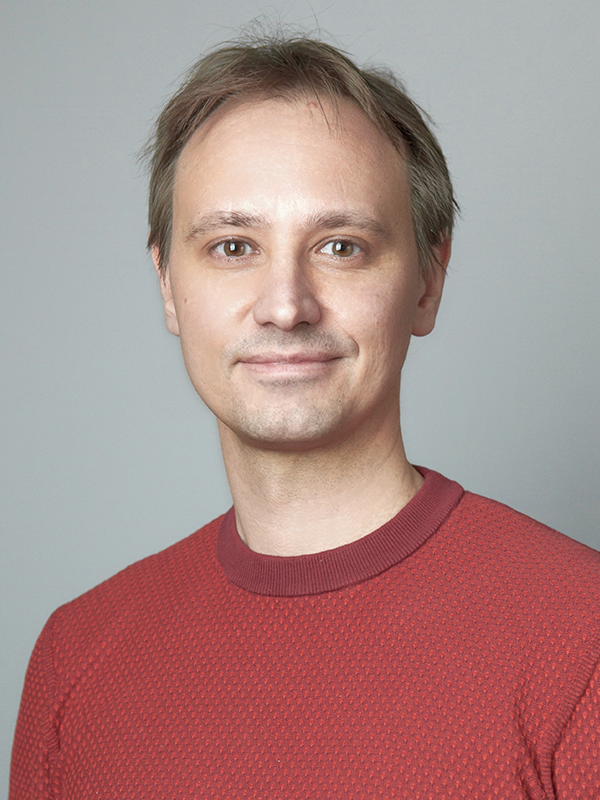
Dr Benjamin Höhne, Heidelberg Research Service, Heidelberg University
Speaker profile
Dr Benjamin Höhne is Cluster Manager EU at the Heidelberg Research Service, where he advises researchers on the preparation of European collaborative proposals and supports the management of funded EU projects with a coordination role at Heidelberg University. In parallel, he leads international projects in digital learning, capacity building, and stakeholder-oriented training design for academic, public, and industry-related contexts.
Across the years, he has combined academic research, project acquisition, and cross-sector collaboration between universities, industry, and societal actors. He has coordinated and contributed to multiple collaborative projects funded by EU, BMFTR, GIZ, and DAAD programmes, supported partnerships with organisations such as Siemens Energy, Bayer, MAN, and several universities in Europe, Africa, Asia, and Latin America.
His background includes a PhD in psychology from Leuphana University, where he conducted and published research in negotiation and social psychology, as well as several years of teaching and executive training in communication, conflict management, and research-related skills. Today, his work focuses on helping researchers and institutions translate complex ideas into fundable projects, navigate funding schemes strategically, and build effective collaborations across academic and non-academic sectors.
The Science Market will present an opportunity for students and early career researchers to join moderated discussions around their chosen research topics, exchanging knowledge and research ideas and networking with peers. Attendees will have the opportunity to moderate discussions concerning their areas of work and research.
A series of 5-minute research presentations given by attendees, designed to support knowledge exchange and networking among attendees.
An informal session supported by icebreakers and group activities to generate networking and discussion among attendees.
This "Ask-Me-Anything" session featuring panelists from a range of career levels and paths will enable attendees to seek guidance on careers and other topics of importance to them. Panelists TBC.
Panelists
Jakob Kaiser
Jakob is a final-year PhD student at Heidelberg University, where he also completed his Bachelor's and Master's degrees in Physics. During his Master's he spent an Erasmus year at Durham University, UK and completed an internship at Bosch. His research focuses on mapping neuroscientific models onto the neuromorphic BrainScaleS-2 system. He is currently figuring out where to go next: academia or industry.

Dr Alper Yegenoglu
Alper Yegenoglu received his PhD in Computer Science in 2023 from RWTH Aachen University and the Data and Simulation Science division at the Jülich Supercomputing Centre, Forschungszentrum Jülich. His doctoral research focused on meta-learning and gradient-free methods for optimising spiking neural networks and reservoir systems for classification and multi-agent systems on high performance computers.
Prior to his doctoral studies, he worked as a software coordinator at the Institute of Neuroscience and Medicine (INM-6), Forschungszentrum Jülich, where he contributed to the development of the electrophysiological data-analysis toolkit Elephant.
After completing his PhD, he worked as a postdoctoral researcher at the Neuro AI & Robotics Lab in Madrid and at the Donders Institute for Brain, Cognition and Behaviour in Nijmegen, where he investigated emergent agency in robots. He is currently a postdoctoral researcher in the Automatic Control Group at Paderborn University. His research focuses on applying brain-inspired learning techniques to the control of small-scale robotic systems. He also investigates the use of foundation models in reinforcement-learning applications for robotic control.
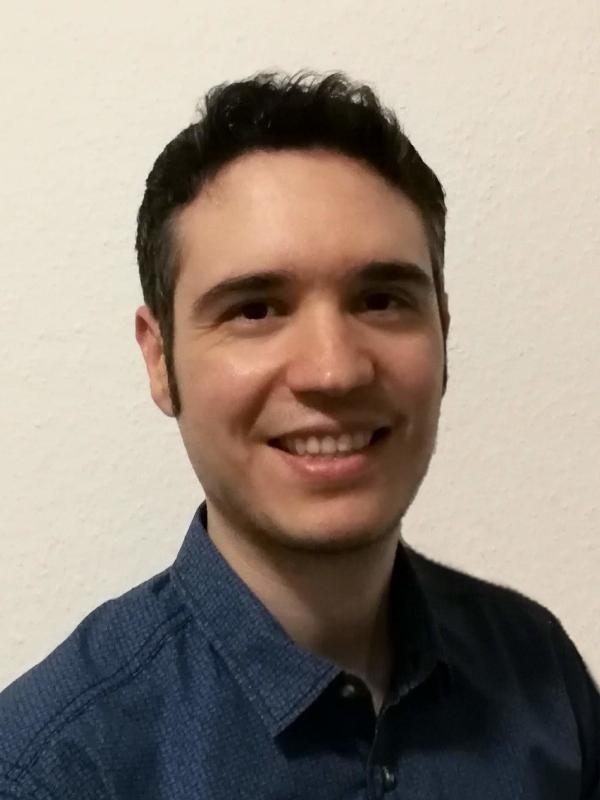
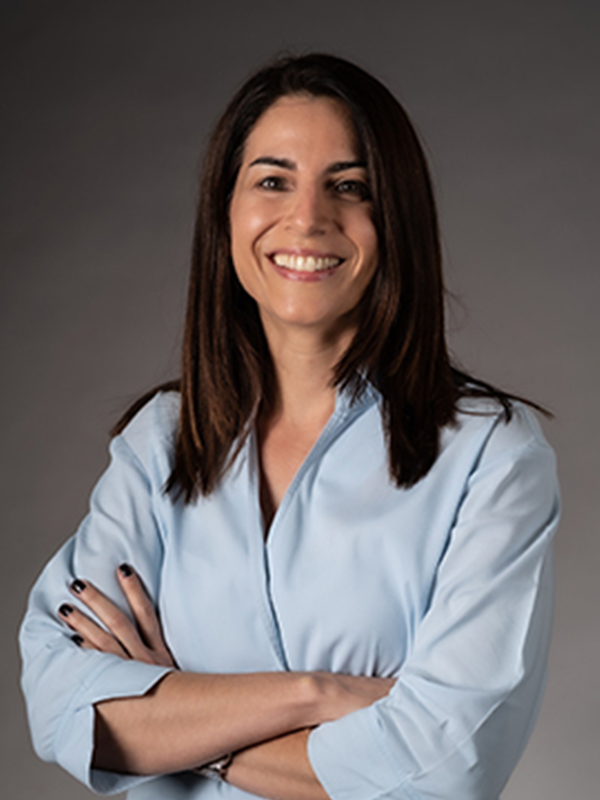
Evita Maili
Evdokia (Evita) Mailli is a technical manager and research associate for the Institute of Management of Information systems team at ATHENA Research and Innovation Center. She has designed, supervised and built numerous data driven software applications, in research and business contexts. Her current interests involve federated learning, sensitive data, and decision support tools. She holds a bachelor’s degree in mathematics from the University of Patras, and an MSc in Computer Science from the NKUA University of Athens.
Optional tours of the BrainScaleS neuromorphic computing infrastructure, based at the EINC in Heidelberg, delivered by BrainScaleS researchers.
Further opportunities for informal networking, with snacks provided, at a nearby bar.
Registration
Registration is €20. Registration deadline extended until 1 October!
If you have an EBRAINS account (recommended) please register here with EBRAINS account.
If you do not (yet) have an EBRAINS account, please register here.
To complete your registration, please fill out the detailed registration form which will be emailed to you within 1 week of registering via one of the links above. This form also provides the opportunity to apply to moderate a Science Market session or present a Lightning Talk.
EBRAINS Users Days
The EBRAINS Users Days will take place before the Student Day, on 6 and 7 October. Click here to find out more.
Organiser: EBRAINS Education Team | Medical University Innsbruck
Contact: education@ebrains.eu at end of page
Useful Information
Erasmus funding
If you have an employment contract with your institution (for example, as a PhD student) and register for two or more days of events in Heidelberg (for example, by joining the Users Days as well as the Networking Event), you may be eligible for Erasmus funding through the Staff Funding for Training Programme. Please contact your institution's Erasmus or International Office to inquire.
KidsClub
Childcare for the children of visiting researchers can be organised through the Heidelberg University KidsClub. Please contact the KidsClub directly for more information and availability.
Event Details
Create an account
EBRAINS is open and free. Sign up now for complete access to our tools and services.